The Curious Side of the Smokies: 9 Things You Probably Didn’t Know
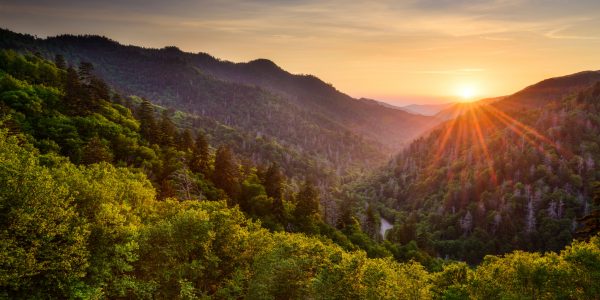
The Great Smoky Mountains are known for their breathtaking views, winding mountain roads, cozy cabins, and black bears wandering through the forest. But there’s another side to this region filled with unusual wildlife, unexpected history, and traditions that make the Smokies unlike anywhere else.
Did you know that the Smokies are called the Salamander Capital of the World? That Pigeon Forge got part of its name from a bird that has been extinct for more than a century? Or that an abandoned mountain community is tucked away inside Great Smoky Mountains National Park?
From blue-glowing fireflies to the story behind Gatlinburg’s pancake reputation, here are nine curious facts that might make you see the Smokies a little differently.
1. the Salamander Capital of the World
When people think about wildlife in the Smokies, black bears, elk, and white-tailed deer usually come to mind. However, one of the region’s most remarkable wildlife claims belongs to a much smaller resident: the salamander.
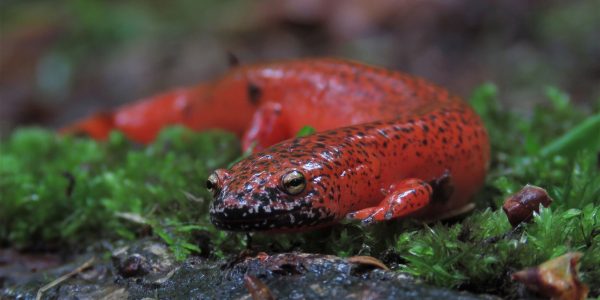
Great Smoky Mountains National Park is known as the “Salamander Capital of the World,” and for good reason. The park is home to 31 documented species of salamanders, making it one of the richest areas for salamander diversity anywhere on Earth.
These amphibians thrive in the Smokies’ cool, damp forests, where shaded streams, leaf-covered ground, and moist rock crevices create ideal habitats. Some are easy to overlook, while others have striking colors and patterns that make them fascinating to discover.
Even more surprising, many Smoky Mountain salamanders belong to a family known as lungless salamanders. Instead of breathing with lungs, they exchange oxygen through their skin and the lining of their mouths. That means keeping their skin moist is essential to survival.
So, while visitors may come to the Smokies hoping to spot a bear, there’s an entire world of fascinating wildlife hiding beneath their feet.
2. Pigeon Forge Is Named After an Extinct Bird
Pigeon Forge is one of the most recognizable destinations in Tennessee, but have you ever wondered where its name came from?
The answer involves a river, an iron forge, and a bird that no longer exists.
The Little Pigeon River was named for the passenger pigeon, a bird that once traveled across North America in enormous flocks. Early settlers reportedly saw large numbers of these birds along the river, inspiring its name.
The “Forge” portion comes from an iron forge established by Isaac Love in the early 1800s near the river. The community that developed in the area eventually became known as Pigeon Forge, combining the river’s name with the historic forge.
The passenger pigeon itself has a remarkable—and heartbreaking—story. Once incredibly abundant, the species declined dramatically due to large-scale hunting and habitat loss. The last known passenger pigeon, Martha, became the final documented member of her species at the Cincinnati Zoo in 1914.
Today, millions of visitors travel through Pigeon Forge each year without realizing that the town’s name is connected to a bird that has been gone for more than a century.


3. Gatlinburg Is Known as the Pancake Capital of the South
In the Smokies, breakfast isn’t just a meal. It’s practically a mountain tradition!
Gatlinburg is often called the “Pancake Capital of the South,” but the love for a good pancake breakfast stretches throughout the Smoky Mountain region. From Pigeon Forge to Gatlinburg and beyond, pancake houses have become a beloved part of the local dining scene. Visitors can find everything from classic buttermilk pancakes to towering stacks topped with fresh fruit, chocolate chips, and plenty of sweet additions.
One of the most important names in that tradition is The Pancake Pantry. Opened in 1960 by Jim and June Gerding, it became Tennessee’s first restaurant devoted exclusively to pancakes, helping establish a breakfast tradition that continues to welcome visitors today.
That tradition has grown well beyond Gatlinburg, with local favorites like Regan’s House of Pancakes, Smoky Mountain Pancake House, and Flapjack’s Pancake Cabin giving visitors plenty of places to enjoy a memorable mountain breakfast. Whether you’re starting your day in Pigeon Forge or exploring Gatlinburg, there’s always room for one more stack!
But pancakes aren’t the only mountain tradition visitors can experience. The Smokies also have a long history tied to logging and the lumber industry, and that rugged lumberjack spirit is still celebrated throughout the region. At Paula Deen’s Lumberjack Feud, visitors can watch professional lumberjacks compete in log rolling, axe throwing, speed climbing, and other timber sports.
From a stack of pancakes to a little lumberjack competition, the Smokies have plenty of ways to serve up a taste of mountain tradition!


4. Some Fireflies Are Actually Blue Ghosts
When you picture fireflies in the Smokies, you probably imagine little flashes of yellow-green light blinking across a summer evening. But not every firefly follows the same pattern.
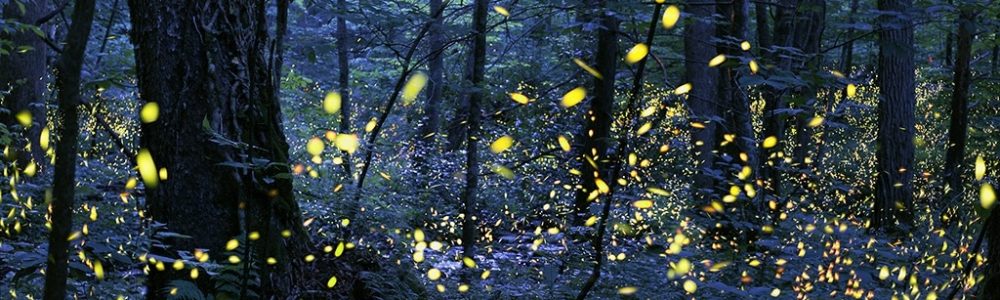
One particularly unusual species is known as the blue ghost firefly (Phausis reticulata). Rather than blinking on and off like the fireflies most people recognize, male blue ghosts produce a steady, pale blue or green glow that can last for 30 to 40 seconds at a time.
Even more interesting? The females look quite different from the males. They’re pale in color and wingless, spending their time on or near the forest floor while the males fly above them, glowing as they search for a mate.
The Smokies are home to 19 different firefly species, including the famous synchronous fireflies that flash together in coordinated patterns. Blue ghosts offer a completely different kind of nighttime display.
It’s a reminder that there’s much more happening in the Smoky Mountain forest after sunset than meets the eye.
5. Elk Disappeared From the Smokies—and Had to Be Brought Back
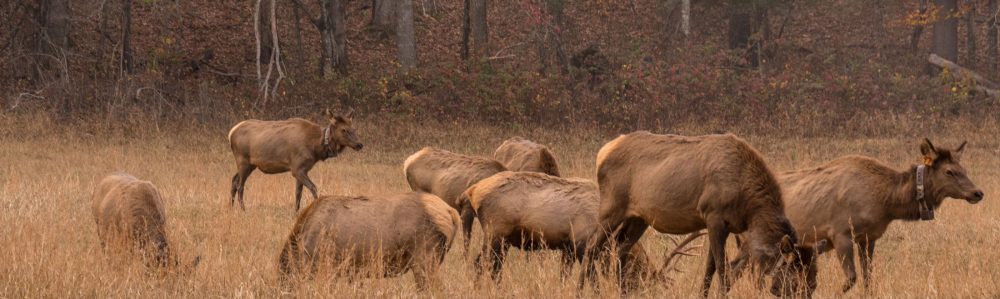
Today, seeing an elk in the Smokies is a memorable experience, especially when a large bull appears in an open field in Cataloochee Valley. But elk weren’t always part of the park’s modern wildlife population.
Elk once lived throughout the Southern Appalachian region. However, overhunting and changes to their habitat caused them to disappear from the area by the mid-1800s.
For more than a century, the mountains went without these impressive animals. That changed in 2001, when the National Park Service began a reintroduction program to bring elk back to Great Smoky Mountains National Park.
The initial effort was part of a five-year experimental program. The goal was to restore a native animal to its historic range and study how the population adapted to the park.
The effort was successful, and elk can once again be found in the Smokies. Today, Cataloochee Valley is one of the best-known places to look for them, while elk are also seen around Oconaluftee.
If you’re hoping to spot one during your visit, early morning and late evening are often the best times. Just remember to give these large wild animals plenty of space.
It’s hard to imagine that one of the Smokies’ most recognizable wildlife sightings was once something visitors couldn’t experience here at all.
6. The Old Mill Is Older Than the Town’s Tourism Boom
Today, Pigeon Forge is known for its attractions, entertainment, shopping, and busy Parkway. But long before the town became a major vacation destination, life in this mountain valley revolved around farming, community, and a working gristmill.
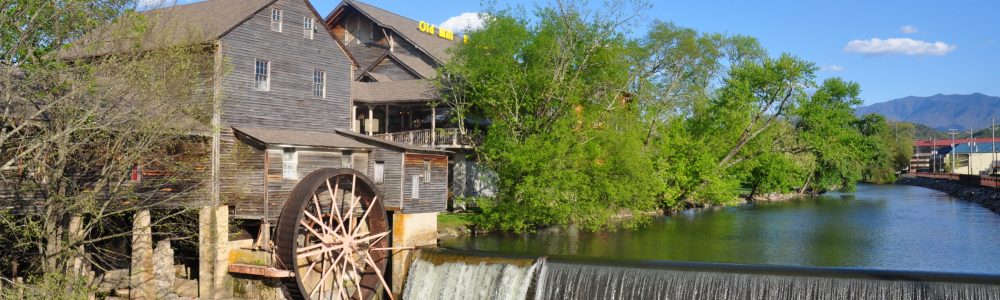
Built around 1830, The Old Mill was established by William Love along the Little Pigeon River. Local farming families relied on the mill to grind grain into meal and flour, making it an important part of everyday life.
The mill wasn’t just a place to get grain ground. It also became a gathering place where neighbors could exchange news, visit with one another, and take care of necessities.
In fact, the first post office serving the area that would become Pigeon Forge was established at the mill in the 1840s. That means this historic building played a role in the community long before modern tourism transformed the area.
Today, the water still turns the mill’s wheel, and visitors can explore the surrounding shops, restaurants, and historic grounds. It’s a chance to experience a piece of Pigeon Forge’s past without having to imagine what the town looked like before the Parkway.
The next time you pass through, take a moment to appreciate just how much history surrounds this familiar landmark.
7. The Smoky Mountains Really Do Make Their Own Haze
Have you ever looked across the mountain ridges and wondered why they seem to fade into shades of blue?
The Smokies’ signature haze is more than just a pretty view. It’s part of what gives the mountain range its name.
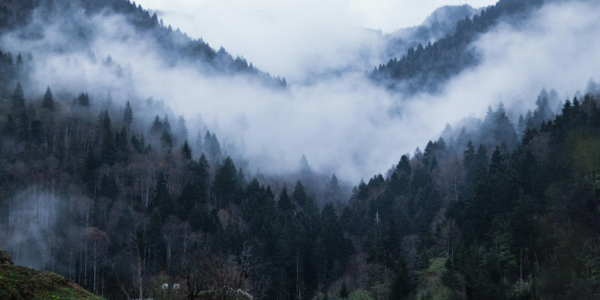
The blue haze is created through a combination of natural processes involving the forest, sunlight, and moisture in the air. Trees and other vegetation release natural compounds called volatile organic compounds, or VOCs. When these compounds interact with sunlight and moisture, they can form tiny particles in the atmosphere.
Those particles scatter sunlight, particularly blue wavelengths, creating the soft blue appearance that settles over the mountain ridges.
The park’s extensive forests play an important role in this process. With approximately 95% of Great Smoky Mountains National Park covered in forest, there’s plenty of vegetation contributing to the atmosphere that creates this distinctive effect.
So, the next time you see that familiar blue haze drifting across the ridges, remember: it’s not simply fog, and it’s not smoke from a fire. It’s part of the natural environment that makes the Smokies so recognizable.
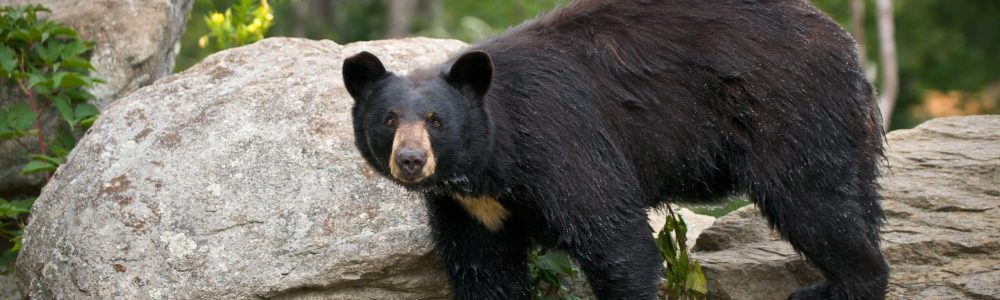
8. Black Bears Can Run Faster Than Most People Drive Through a Parking Lot
Black bears are one of the most iconic animals in the Smokies. Visitors love spotting them along the roadside, climbing trees, or wandering through the forest. But don’t let their sometimes relaxed appearance fool you. These animals are incredibly athletic.
Black bears can run up to 30 miles per hour.
That’s faster than most people can sprint, and certainly faster than you’d want to test for yourself on a mountain trail.
Their abilities don’t stop there. Black bears are excellent climbers and swimmers, with strong legs, powerful bodies, and non-retractable claws that help them navigate their surroundings.
Great Smoky Mountains National Park is estimated to be home to approximately 1,900 black bears, or roughly two bears per square mile. That makes the Smokies one of the most important protected habitats for black bears in the eastern United States.
Another interesting fact? About 85% of a black bear’s diet consists of plant material. Berries, nuts, and acorns are especially important, although they also eat insects and other animal matter.
Seeing a bear can be one of the highlights of a Smoky Mountain vacation, but black bears are wild animals, and sightings are never guaranteed. If spotting a black bear is on your vacation wish list, there are opportunities to observe them in a more controlled, safe, and educational environment. Visitors can see black bears at Ober Gatlinburg or visit the Three Bears General Store Bear Habitat in Pigeon Forge.
When exploring Great Smoky Mountains National Park, remember to admire wildlife from a safe distance. Never approach or feed a bear, and always give them plenty of room. The National Park Service recommends staying at least 50 yards away.
Whether you spot one in the wild or visit a designated bear habitat, these incredible animals are worth learning about!
9. A Ghost Town Is Hiding Inside the National Park
Tucked away inside Great Smoky Mountains National Park is a place with a story that feels like something from another time.
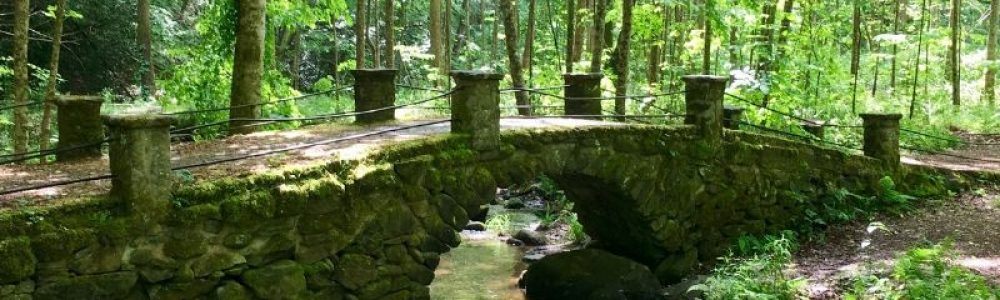
Today, Elkmont is known for its historic cabins, peaceful surroundings, and nearby trails. But more than a century ago, it was a bustling community built around the logging industry.
In the early 1900s, large-scale logging brought a railroad, workers, and an entirely new way of life to the area. Elkmont grew to include a company store, church, school, hotel, tavern, machine shop, and homes for employees. At its height, the community had more than 1,500 residents.
As logging operations moved on, the area began to change. The railroad was eventually removed, and the logging town closed. However, Elkmont’s story didn’t end there.
The land also became a popular mountain retreat. Vacation communities developed nearby, including the Appalachian Club and Wonderland Club, where families traveled to escape the heat and enjoy the mountain scenery.
When Great Smoky Mountains National Park was established, the future of these vacation homes became part of a larger preservation story. Some structures were removed, while others were preserved as historic buildings.
Today, visitors can explore the Elkmont Historic District and see preserved cabins in Daisy Town, along with remnants of the communities that once stood there.
It’s hard to believe that a place now surrounded by forest was once home to a thriving logging town and a popular vacation retreat. And it’s a wonderful reminder that the Smokies hold stories far beyond the ones found along the main roads.
The Smokies Are Full of Surprises
The Smoky Mountains have a way of keeping visitors curious. Behind the scenic overlooks, popular attractions, and familiar mountain traditions are stories that are easy to miss if you don’t know where to look.
You might come for the views and leave remembering the tiny salamanders, glowing blue fireflies, the extinct bird behind a town’s name, or the historic community hidden in the forest.
And that’s part of what makes this region so special. There’s always something new to discover, whether it’s your first visit or your fiftieth.
The next time you’re exploring Pigeon Forge, Gatlinburg, Sevierville, or Great Smoky Mountains National Park, take a closer look. You never know what curious piece of Smoky Mountain history or wildlife you might find.